

Samsung today introduced ISOCELL Auto 4AC, an automotive image sensor that offers advanced 120-decibel (dB) high dynamic range (HDR) and LED flicker mitigation (LFM) especially for surround-view monitors (SVM) or rear-view cameras (RVC) in high-definition resolution (1280 x 960). The new sensor is Samsung’s first imaging solution optimized for automotive applications. Various lighting situations on the road may pose obstacles to the driver. Quick transitions from a low-lit environment to a brighter one, such as exiting a tunnel, may require a few seconds for the driver’s eyes to adjust. Also, flickering from LED headlamps or road signage, such as street lamps and traffic lights, could become increasingly noticeable on the automotive system’s camera screen.
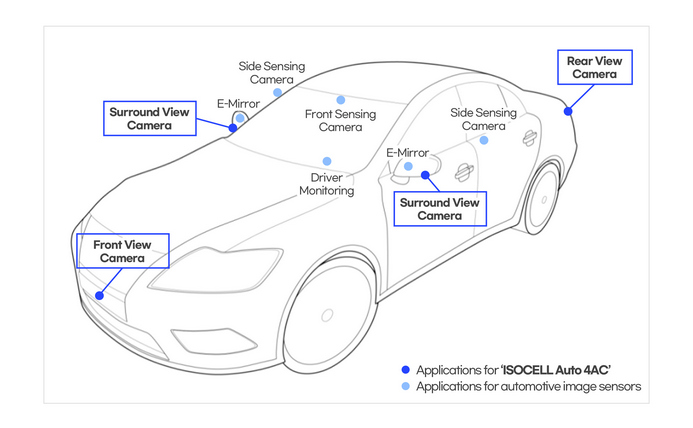
The Samsung ISOCELL Auto 4AC offers a safer driving experience with an enhanced field of view for the driver with its CornerPixel technology. The technology features a specialized pixel structure that mitigates LED light over 90-hertz (Hz). Within a single pixel area, it embeds two photodiodes, one 3.0µm pixel for viewing low light images, and a 1.0µm pixel placed at the corner of the big pixel for brighter environments.
To minimize LED flickering, the smaller photodiode’s exposure time can be extended, preventing pulsing LED light from being displayed as flickering on the camera screen. This delivers a more pleasant viewing experience for the driver and more accurate image data on LED-embedded objects for the automotive system to recognize.
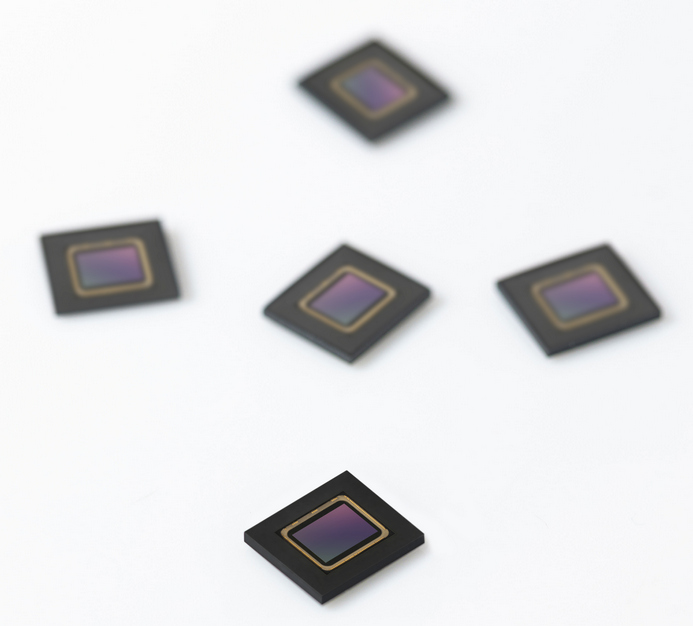
The Samsung ISOCELL Auto 4AC comes in a 1/3.7-inch optical format with 1.2 million 3.0-micrometer (µm) pixels, and for streamlined client system installations, an image signal processor (ISP) is embedded within the sensor. The 4AC meets stringent AEC-Q100 Grade 2 qualifications, including a -40°C to 125°C operating temperature range, and is currently in mass production.


